
Counter-Movement Jump (CMJ), Squat Jump (SJ), and Drop Jump (DJ) are all types of jump tests used to assess an athlete's power, explosiveness, and lower-body strength.
The best test depends on the specific goals of the assessment and the athlete’s characteristics.
Counter-Movement Jump (CMJ)
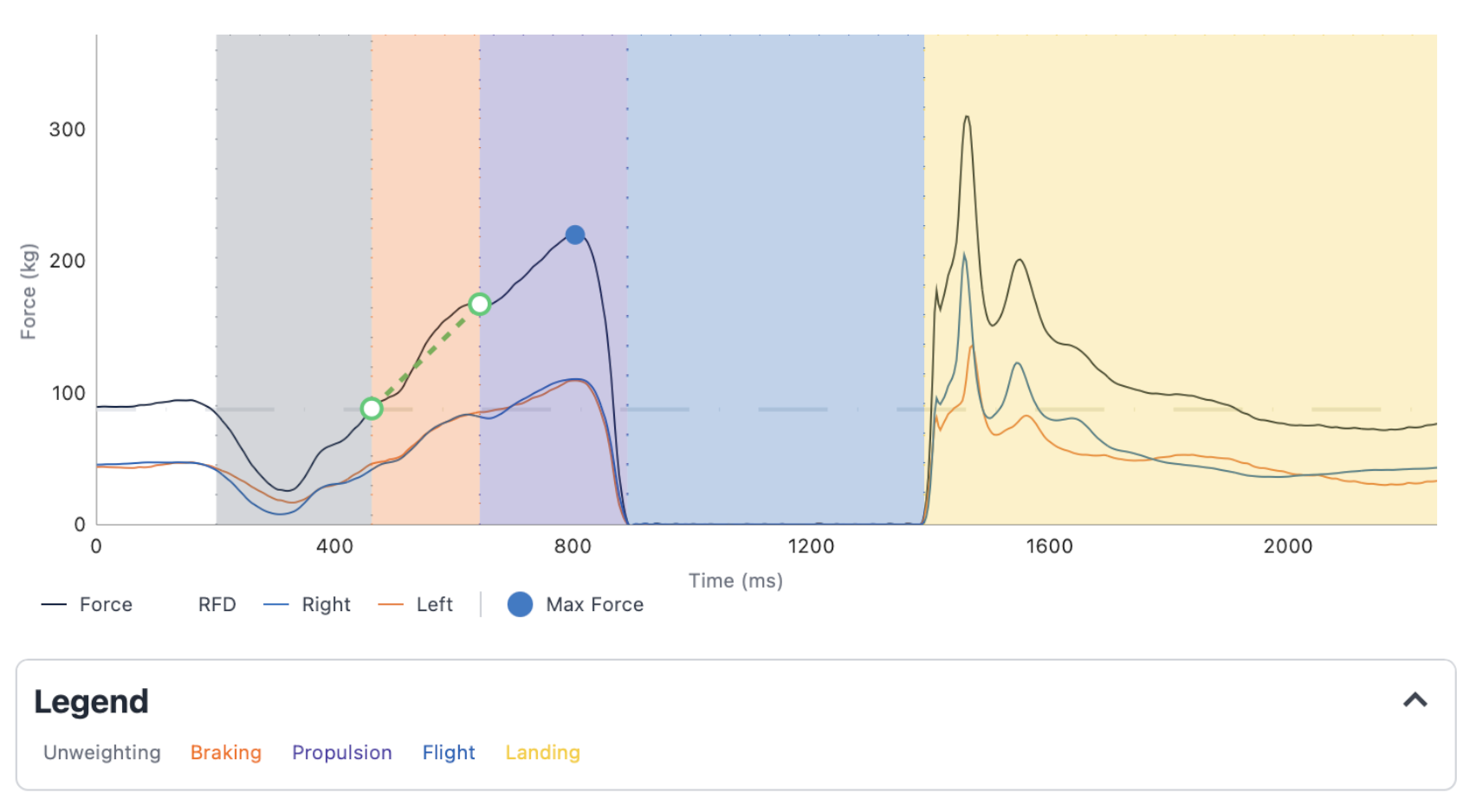
In a CMJ, the athlete starts from a standing position and quickly bends the knees before jumping as high as possible.
This test evaluates the ability to use the stretch-shortening cycle (SSC)—muscles stretch and then contract rapidly to produce force. The SSC is key for explosive activities such as jumping, running, and throwing.
Squat Jump (SJ)
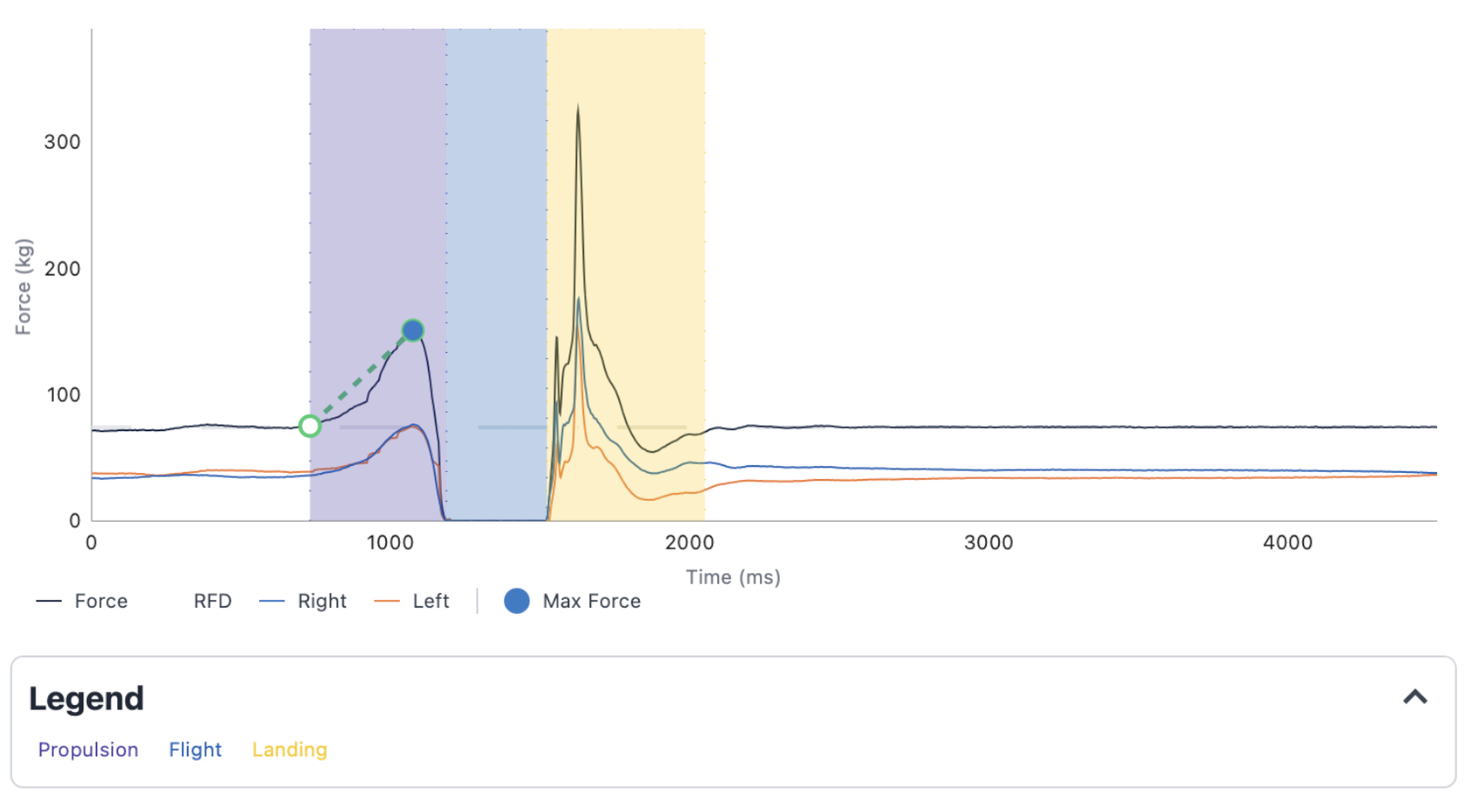
In an SJ, the athlete begins in a squatting position and jumps as high as possible without any counter-movement.
This jump measures pure strength and power and is useful for evaluating concentric force production in isolation.
Drop Jump (DJ)
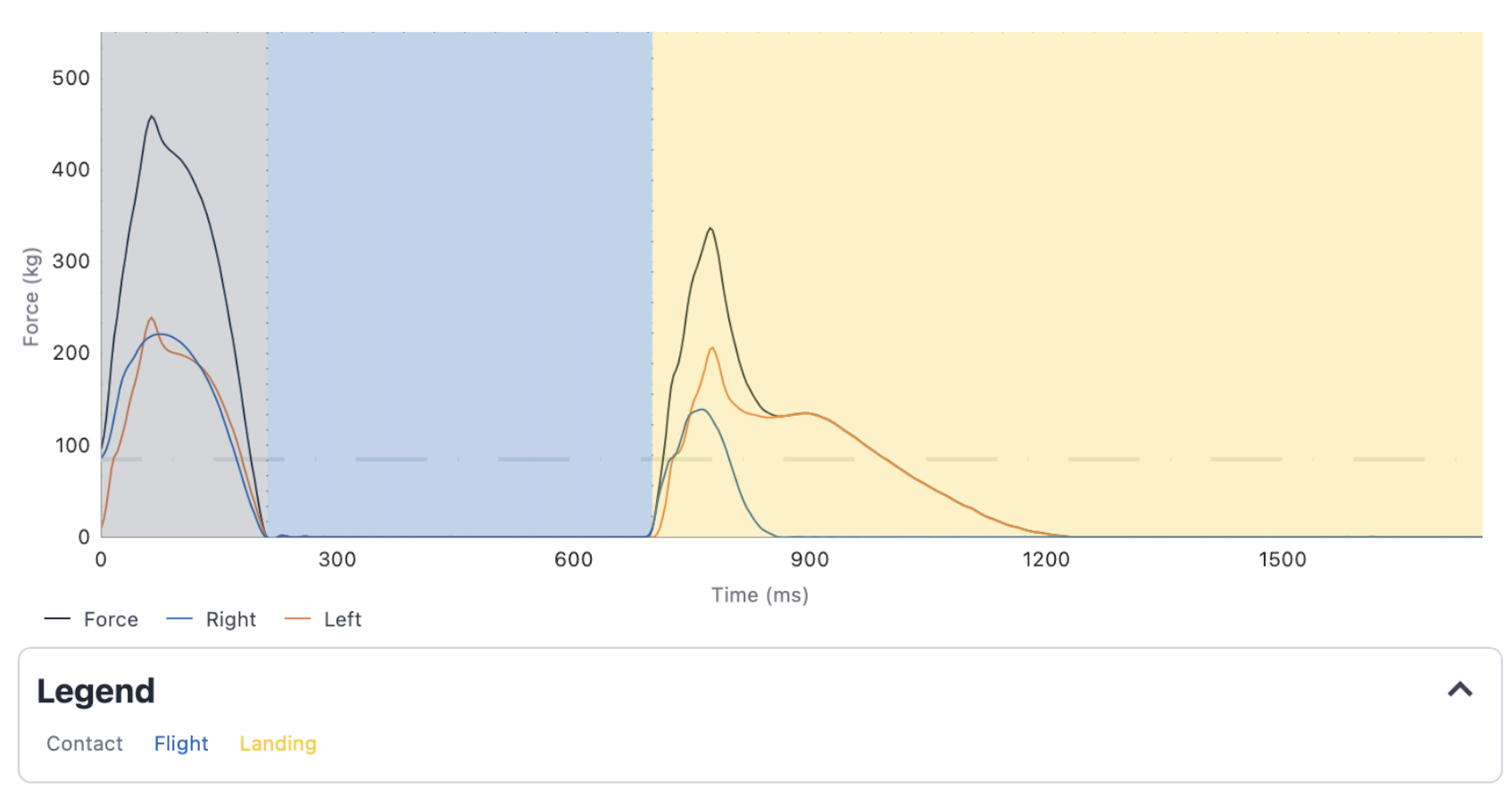
The athlete jumps down from a height (box or platform) and immediately rebounds upward as high as possible.
The DJ assesses the ability to absorb landing forces and rapidly re-use stored energy for an explosive upward jump—testing the SSC under ballistic conditions and the neuromuscular reactivity of the lower body.
Summary
- CMJ: Best for assessing power, explosiveness, and effective use of the stretch-shortening cycle.
- SJ: Focuses on lower-body strength and concentric power without pre-stretch.
- DJ: Evaluates both strength and power, plus the ability to quickly use landing energy for an immediate rebound.
These tests should always be performed under the supervision of a qualified professional, using proper technique to ensure accurate and reliable results.